

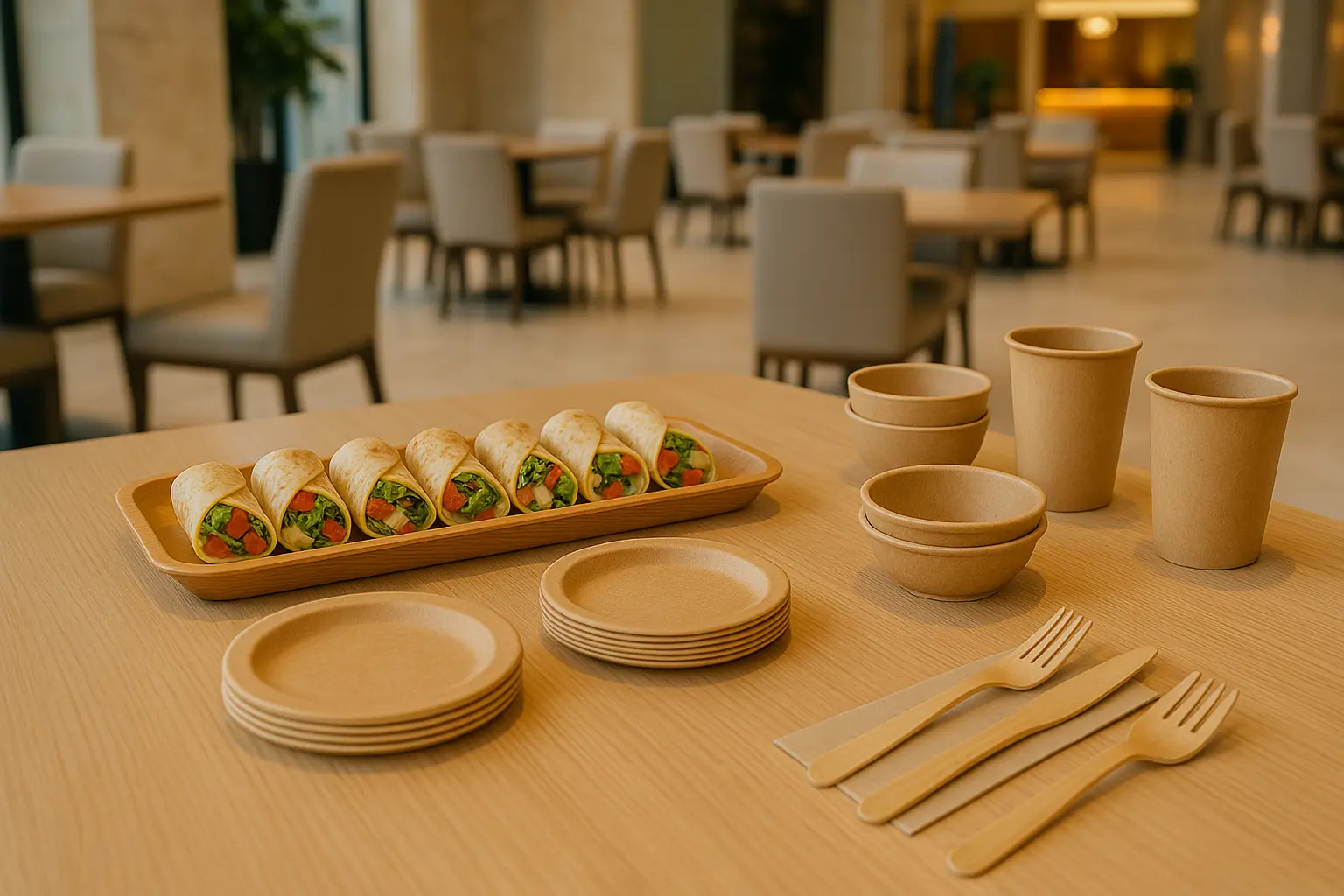
As governments, brands, and consumers push for sustainable materials, bamboo is quickly emerging as a global favorite—often beating plastic alternatives cost, and environmental impact.
1. Fastest Renewable Resource
Bamboo grows incredibly fast and regenerates without replanting. Unlike trees or fossil-based plastics, it can be harvested sustainably year after year, making it ideal for large-scale production.
2. Truly Biodegradable
Many “plastic alternatives” still leave behind microplastics or require industrial composting. Bamboo naturally decomposes, returning safely to the soil without toxins.
3. Strong, Lightweight & Versatile
Bamboo is surprisingly strong—often comparable to steel by weight. This makes it suitable for packaging, cutlery, furniture, textiles, and even construction, replacing plastic across multiple industries.
4. Lower Carbon Footprint
Bamboo absorbs more CO₂ and releases more oxygen than many trees. Combined with low water and chemical needs, its overall environmental cost is far lower than plastic or bioplastics.
5. Consumer Trust & Global Adoption
Eco-conscious consumers prefer materials that feel natural and honest. Bamboo products signal sustainability clearly, helping brands build trust while meeting global regulations against plastic.
Final Thought
Bamboo isn’t just replacing plastic—it’s outperforming it. With renewability, strength, biodegradability, and consumer appeal all in its favor, bamboo is set to lead the next generation of sustainable materials worldwide.
🌱 Nature-built. Future-ready.